

Have you bought a red-light therapy device, and are now squinting to see the eye protection included? You may not have received any eye protection, and are wondering if you can use sunglasses instead? Let's figure out the goggle issue.
Standard blackout goggles similar to those used in tanning are usually sufficient for protection and comfort during red light therapy. This is especially true when facial devices or panels with high intensity near the face are used. Filtering goggles that are designed for red light therapy are not usually necessary.
RLT can be treated with a variety of eye protection.
Red light therapy is an investment in your health. It can help you achieve benefits such as better skin and a softer muscle. You don't want to accidentally cause your eyes discomfort or damage. There are many misleading facts about eye protection. It's simple, but there is a lot of misinformation. We'll look at what works and what doesn't.

Do you need special 'Red Light therapy Goggles?
Are you curious about the unique properties or filters of goggles that are specifically marketed for RLT? Are there any differences between these and regular tanning goggles? Let's clarify.
In general, goggles that use standard LED devices do not require any special "red light therapy filtering" technology. It is important to prevent retinal damage and block intense visible light. This is achieved by basic, opaque "blackout" style goggles.
Marketing can sometimes suggest that something more complicated is needed.
Understand the purpose: Block brightening, not filter wavelengths
· The main issue: With RLT, the primary concern is not the wavelength (unlike UV), it's the intensity or brightness. This is especially true when the source of light is used up close or facing directly into the eyes. It is not a good idea to stare into a bright light.
· Opaque Goggles Do the Trick: Simple glasses that block all visible light (opaque cups of plastic) stop this intense brightness reaching your retina. It doesn't require fancy filters that let certain wavelengths through while blocking others.
· Tanning Glasses: These glasses are also designed to block intense UV and visible light during tanning sessions. These goggles are usually opaque and perfect for RLT. The goggles that come with RLT equipment are often identical to or very similar in design to regular tanning goggles.
· Why Filters are Not Usually Required: RLT does not use coherent LEDs, unlike laser safety goggles which must block specific wavelengths of high-power lasers in order to prevent immediate damage. The risk profile of RLT is different, despite the fact that it's bright. If any light was intended for the eye, filtering out therapeutic red/NIR would defeat the purpose (which is and not for direct high intensity exposure).
Bottom Line: Do not overpay for goggles that claim special "RLT filters" unless they provide a specific and evidence-based explanation tied to the particular technology used (which is uncommon for LED panels/masks for consumers).
Can I just use sunglasses instead of goggles?
You have a pair or dark sunglasses in your pocket and think they will be sufficient? It seems logical that they would block the light. Let's look at why they are not the same.
Regular sunglasses do not provide adequate protection for the eyes during sessions of red light therapy. The sunglasses are not designed to block UV or reduce glare, but to block ambient glare. They may provide a false feeling of security and inadequate protection.
The wrong sunglasses for this job?
Why Sunglasses don't cut it:
1. Incomplete Blocking of Light: Dark sunglasses still transmit a large percentage of visible light. (That's why you can see through them!) The RLT panel will not be able to block out the light of an RLT panel that is placed just inches away from your face. Opaque goggles aim for near-total blockage.
2. Poor Seal Sunglasses have gaps around the edge where light can enter easily, especially when you are moving or if the light source is big. RLT goggles are often contoured to fit close to the eye socket and minimize peripheral light entry.
3. Wrong Use: They are designed to reduce indoor brightness and outdoor glare. They're not designed to be exposed directly to therapeutic light intensities.
4. NIR transmission: Sunglasses provide variable and sometimes poor blocking of near infrared light (NIR), which is an important component of many RLT devices. Although the primary goal of sunglasses is to block visible brightness, they do not offer reliable protection against invisible NIR that could reach the eyes.
It's better to use sunglasses than nothing but they are far from the standard opaque goggles recommended for situations involving direct or close exposure.
What Makes a Good RLT Goggles?
It's time to get opaque goggles. What about different features or styles? What makes one pair more comfortable or better than another? Consider the practical aspect.
Goggles with complete opacity are best. They should also have a secure and comfortable fit, minimizing gaps. Materials that are durable and adjustable for different sizes of heads may be included. Easy cleaning is another plus.
The key to a comfortable and effective blockage is comfort.
Desirable Goggle Features:
· Complete Opacity Hold the cup up against a bright light. You can see and light through the main part of the cup. It shouldn't. You should.
· Comfortable fit: They shouldn't dig into your eye sockets or feel too tight. Uncomfortable goggles will be less likely to get worn. The material should be flexible enough to conform to the contours of your face.
· Secure seal: Although a completely airtight seal may not be necessary, goggles must sit close to the face in order to reduce light leakage from the side, top or bottom.
· Adjustable strap: A stretchy elastic strap keeps the goggles in place even if you are lying down or shifting your position. The adjustable strap provides a snug, yet comfortable fit to a variety of users.
· Durability and Cleanliness: The material should be durable plastic that will withstand repeated use. The smooth surfaces allow them to be easily cleaned between sessions. This is very important, especially for shared equipment.
· Nose Piece: Certain designs come with a more defined piece of nose that can be used to improve fit or block out light on the bridge.
These criteria are met by many reputable RLT providers including Piplux when applicable. Standard "tanning-bed goggles" can be purchased in many places and are generally suitable.
Do I always need goggles, even with my eyes closed?
Do you wonder if simply squeezing the eyes closed tightly is sufficient protection? How about a panel that is further away? Let's review when protection is the most important.
Although closed eyelids provide significant blocking, opaque goggles are still recommended when using facial masks, for close-up panels (especially those with high intensity), for NIR-heavy equipment, for sensitive individuals or for comfort. Closed eyes may be sufficient for distant or indirect exposure if they are comfortable.
Risk level and comfort are important.
Recap: When goggles are most recommended:
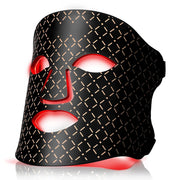
1. LED face masks: Yes. The LEDs are placed directly above your closed eyelids. Use the opaque protection provided.
2. Panels Near Face: Are you treating facial skin, neck or scalp using a panel that is inches away from your face? Due to the intensity, goggles are strongly recommended.
3. High-Irradiance Devices (HID): Goggles are more effective when the panel is more powerful, even if they are not aimed directly at the face.
4. NIR Wavelengths Because NIR (850nm+), is dim or invisible, you may underestimate the energy. For close NIR exposure, goggles are a good idea.
5. Light Sensitivity/Eye Condition: If your eyes are sensitive to light, you should always wear protection. Consult with your doctor if necessary.
6. Comfort: Goggles can make the experience more relaxing if the bright light coming through your eyelids causes discomfort or is distracting.
If you are treating your legs or back with a panel that is several feet away from you, you can keep your eyes shut and your face away. Goggles may be optional , especially if there is no discomfort. When in doubt, it's better to be safe than sorry.
conclusion
Use opaque blackout goggles for RLT. They are ideal for close-up panels, direct facial application, and comfort. Skip the sunglasses. Make sure the goggles are comfortable and block out all light. Your eye safety is important for a worry-free treatment.