

The eyes are often called the windows of the soul. Although there is some truth in the saying, eyes are so much more. Our eyes are our windows to the world outside. The eyes allow us to engage with the world around us in a meaningful manner and navigate our daily lives with ease and safety.
We take our eyesight for granted. It's not until it's taken away that we realize how much it enriches our life. Loss or deterioration of vision can be devastating from both a practical and emotional standpoint. Doctors and scientists from many different fields have dedicated careers to studying vision and the diseases that can affect it, in order to help people maintain or regain their eye sight and, ultimately, their independence.
Red light therapy is one of the newer areas in research dedicated to eye care and vision restoration. Red light therapy has been around for some time and is becoming increasingly popular as a treatment for many ailments.
What is Red Light Therapy (RLT)?
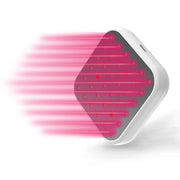
Photobiomodulation, or red light therapy (also called low-level lighting therapy), is a therapy in which light emitting diodes diffuse near-infrared and red wavelengths through the skin to the cells. It activates your body's mitochondrial response, which creates energy and improves the functioning of tissues and organs. Does it sound like a mouthful to you? Here's a breakdown.

Mitochondria, the tiny energy factories inside your cells, are responsible for cellular metabolism. This is the process that converts chemical energy from oxygen molecule and nutrients into adenosine Triphosphate (ATP). ATP is the "energy currency" of your body. It travels from your brain to your organs and tissues, allowing each to perform its functions. ATP synthesis occurs as a result of mitochondrial electron transport chains (METC) or the mitochondrial respiration chain. It's a complex process.
In 1967, Dr. Endre Mester, a Hungarian physicist, accidentally discovered the wide-ranging benefits that red light therapy offers. He was conducting a ruby laser study to determine the effects of laser exposure on tumors in mouse models. He did not see any change in the tumors but he noticed something else: The mice that had received laser treatment grew hair faster and healed wounds quicker than the control group.
Red light therapy was the subject of decades of research, which revealed dozens of health benefits for the entire body. The list of red light therapy benefits is long and growing.
* Wound and scar healing, skin rejuvenation;
* Muscle recovery, growth and performance;
* Weight loss;
* Hair growth;
* Mental health
* Immune health;
* Hormones, sex drives and sexual drive
* Inflammation and pain
* Mental Health and Depression
* Sleep disturbances;
* Oral health and dental care
Eye health is also important.
What are the mechanisms that underlie red light therapy's impact on eye health? Here's a quick overview.
What is the impact of red light therapy on eye health?
Red light therapy increases mitochondrial function and protects against deaths of neurons( excitotoxic cell death) through it. Red light therapy also protects against the inhibition of METC. It causes oxidative stresses when the METC's proper function is impaired. ROS can damage DNA, RNA, proteins, lipids and other molecules. The ROS can damage the METC, which in turn leads to an increase in ROS. This cycle is part of the aging process, which is why our eyesight tends deteriorate with age.
Anti-inflammatory effects of red light therapy are also well documented. It appears to suppress proinflammatory cytokines. These proteins signal the body to enter reaction mode in order to fight an infection or illness. Although this can be a positive thing, an inflammation overdrive may have negative effects. In this case, it can damage neural tissue and affect eye health.
It is also well-known that red light therapy improves circulation. Unhealthy blood flow can make you more susceptible to ocular illnesses. Reduced blood flow can be associated with many eye conditions including glaucoma and macular degeneration.
This article will explore in depth the possible mechanisms behind red light therapy’s beneficial effects on eyesight.
The retina of the eye, and therefore the eyes, also has the highest concentration mitochondria in the entire body. The retina also has the highest metabolic demands in the body. This means that mitochondria aren't just there to decorate the eye, they provide the energy the eyes need to function.
The eyes are so responsive to red light treatment because of the abundance of mitochondria. Here are some of the most common eye problems that can be treated by red light therapy.
What eye conditions can red light therapy treat?
Red light therapy is a non-invasive, safe and affordable treatment for people with various eye conditions.
Let's quickly review what visual acuity means. VA is the ability to perceive objects clearly. This is measured at 20 feet. The test compares how well you see objects that are 20 feet away to someone with normal vision. You can see objects as sharply as someone with normal vision from 20 feet. For example, 20/50 means you can see an item clearly at a distance of 20 feet that a normal-sighted person can see at 50 feet.
Macular Degeneration
The leading cause of blindness among people aged over 50 is age-related macular disease. The macula, which is responsible for clear vision in the retina, can be damaged. You may have blurred central vision or reduced peripheral vision, but your peripheral vision will remain intact.

Recent studies have revealed encouraging results for red light therapy in AMD. In a 2008 study, patients with AMD treated with red-light therapy showed improved visual acuity compared with control subjects. The results were the same for patients with cataracts and those without.
In a more recent 2018 study, 33 subjects with AMD of varying severity were followed. On the other hand, 22 subjects received a placebo. The subjects were monitored for five years. Researchers found no significant improvements in the placebo group. However, there were noticeable improvements among the treatment group. This improvement was sustained after five years. It shows that red light therapy has long-term benefits to AMD patients.
How does it work exactly? Recent studies suggest that red light therapy could improve AMD through the retinal epithelium. RPE is made up of a thin layer that protects the retina, regulates nutrient and waste flow, and helps to regulate the movement of nutrients and waste. In a 2019 study, oxidative stresses can cause degeneration of both the RPE and photoreceptors in AMD .
Diabetic Retinopathy
Diabetic retinopathy occurs when high blood glucose levels caused by diabetes damage the blood vessels of the retina. This results in loss of vision. The macula of patients with DR is thicker than that of healthy subjects.

Researchers studied the effects on photobiomodulation in a study conducted in 2014. They treated 4 patients with DR twice daily, for 80 seconds each, for 2-9 months. The other eye was used as a control and did not receive any treatment. The researchers found that the macular thickness of eyes treated with red light therapy decreased by 20%. Untreated eyes, on the other hand, had an average macular thickness increase of 3%.
In vitro studies (using cultured cells of the retina) and animal studies also support these findings. These and other studies demonstrate that red light therapy can improve DR via various direct and indirect pathways. RLT, for example, inhibits degeneration of the retinal capillaries and leakage due to diabetes.
Amblyopia
Amblyopia, also known as lazy eyes, affects approximately 1.75%. Amblyopia occurs when the brain stops recognizing signals from the eye that is affected, which causes the healthy eye work harder, and the affected one to become weaker. Amblyopia is caused by ametropia, which involves refraction issues. The inability of light to focus properly on the retina causes blurred vision in weaker eyes.
Treatment is critical, and should be started within the first ten years of life. Untreated damage after this time is considered permanent. The red light therapy offers hope to adolescents and adults who suffer from this condition.
A study conducted in 2011 involved 178 patients aged between 13 and 72. About half of these patients had amblyopia due to ametropia while the other halves had strabismus. The red light therapy was applied to 231 different eyes. A control group of 20 eyes from 20 different patients were given a mock treatment. The treatment was given 3-4 times in a 2 week period. Ametropia-affected eyes improved 91% in visual acuity. Strabismus-affected eyes improved 89%. The control group did not show any significant improvement. The visual acuity of the treated eyes did not deteriorate after six months.
Although the exact mechanisms are not yet known, an increased cell metabolism is likely to be a factor. Synaptogenesis or the formation new synapses may also play a part. A synapse, or gap between neurons, allows electrical signals to travel between them. This is how our bodies communicate with your central nervous systems and vice versa. Synaptogenesis may improve communication between the brain and the eye that is weaker.
Retinitis pigmentosa
Retinitis Pigmentosa, also known as RP, is a genetic disorder that affects the retina’s ability to react to light. This condition can cause vision loss over time. This condition can affect night vision, peripheral or central vision as well as color vision. While it does not cause complete blindness, RP makes daily tasks like reading, driving or walking difficult, if not impossible.
Recent animal studies have demonstrated that photobiomodulation is effective in preventing the progression of RP. Recent human studies have shown even greater promise.
In a 2014 study, the effects of red-light therapy were observed on a patient suffering from RP. The 55-year old patient had 20/50 visual acuity in both eyes, and a central field of vision of 5 degrees. (For context, an average person's visual field is 170 degrees. Less than 20 degrees are considered legally blind. The patient received 40 seconds irradiation twice a week to both eyes for two weeks. The patient's peripheral vision and vision were restored after treatment. The only residual dysfunction was a circular scotoma in the mid-periphery. After 5 years the effects of treatment wore off and the patient's eyesight returned to pre-treatment levels. The patient underwent a second successful treatment and continued to receive treatments whenever necessary.
In a study the following year, 14 RP sufferers were treated with red light therapy for 3 minutes twice a day for a total 20 days. Researchers observed a significant improvement in the visual acuity that lasted for the 3-year period of follow-up. This group, unlike the other study did experience an improvement in circular scotoma mid-peripheral. This study reported no side-effects.
More research is needed but the positive results and lack of side-effects indicate that red light therapy can be an effective, long-lasting PR treatment.
Glaucoma
Glaucoma, which affects the optic nerve and is one of the most common causes of blindness among people older than 60 years old, is a group of eye diseases. The progressive damage to the optic nerve eventually leads to blind spots within the visual field. Experts are still unsure why this degeneration of the optic nerve occurs, but it is believed to be caused by an increase in eye pressure due to the build-up and improper draining of the aqueous fluid, which fills the eyes. AH drains normally at the junction of the iris, the cornea and the trabecular matrix.

There are several types of glaucoma, including open-angle (the angle between the iris and the cornea is open), angle-closure (the iris bulges out to block the drainage area), normal-tension (optic damage without any apparent eye pressure), or pigmentary (pigment from the iris accumulates in the drainage area causing a blockage).
There are no studies directly investigating the effects of red light therapy for glaucoma. However, mounting evidence suggests that mitochondrial dysfunction could play a significant role. The hypothesis is the age-related mitochondrial malfunction can cause a reduction in energy, which inhibits the repair of retinal cells. This makes them more susceptible to cell death (apoptosis). RGCs are responsible for capturing the images that you see, and sending them to your brain. Once they die, there is no replacement. It would seem that the key to improving glaucoma outcome is finding ways to prevent RGC deaths.
It's becoming more likely that red light therapy will have a positive impact on glaucoma. This is because its primary effect is an increase in ATP production, at the mitochondrial levels. Red light therapy is a low-risk, viable treatment option until more research can confirm its direct effects on glaucoma.
Red Light Therapy: Is it safe for the eyes?
To date, thousands of studies have examined the benefits of red-light therapy. There is a mountain of evidence that confirms its effectiveness in treating various issues and ailments. Its safety has also been proven.
You might, however, be more reluctant than you would like to expose your skin to direct light. This is for good reason. Certain wavelengths are known to cause eye damage. UV light is known to cause eye damage and sunglasses are widely used. Recent research suggests that blue light can have a negative impact on retinal ganglion cell mitochondria, leading to an increased death of RGCs. This could have important implications for glaucoma, and perhaps other eye conditions.
What about red and near infrared light (NIR)? There is a risk of photoreceptor injury with all light (afterall, red light therapy devices are equipped with protective eyewear). Red light therapy is safe and does not cause damage to the eyes. The two main factors are the wavelength and exposure time.
Exposure length
You may have noticed that all studies on red light therapy for eye health used a minimal exposure, usually between 30 and90 seconds at a given time with a break of a day or so between treatments. Most studies showed that patients experienced long-lasting results after two weeks.
Wavelength
Light is made up of a series electromagnetic waves. Some are visible, while others are not. Visible light is only a small fraction of the entire spectrum of light. The red light is at the extreme end of visible light, with a wavelength between 600 and 700 nanometers. NIR is just beyond the red light, and is not visible to the naked eye. It can range from 780nm to 1mm.

Most studies on red light therapy for eye health and treatment use red light with a wavelength of 670nm. This wavelength is regarded as the most protective in terms of its effects. NIR has also been used in many studies with positive results. In a rat study, however, the protective effects on retinal degeneration of red light therapy were found to be 670nm, but 830nm did not produce any protective effects.
A study from 1984 found that there may be a link between the prolonged exposure to NIR and the gradual development of cataracts. This study was conducted on glass, steel, and iron workers, who are exposed to NIR for a large part of their work life. Red light therapy requires only a very small amount of exposure in order to be effective. Sessions of 30-60 seconds are recommended every few days over a two-week period.
It may take more research to confirm with certainty that short-term exposure of NIR light can cause the same risk, even if it is unlikely. For the time being, the best thing you can do for your eye health is to stay away from the red light that has a wavelength of approximately 670nm.
We always recommend that you consult with your healthcare provider prior to beginning any treatment program. Your ophthalmologist can help you create a plan of treatment that will be most beneficial for your needs and monitor your progress in order to ensure safety.